CUSTOMER ACCESS

Aseptic seals

The hygienic sealing solution for critical processes.

High performance aseptic seals

At Epidor, we have a wide range of aseptic gaskets, designed to guarantee a perfect and safe seal in joints used in the food, pharmaceutical and cosmetic industries. These gaskets are used in standardized joints, where it is essential to avoid any dead zone, gap or hole that can accumulate product residues and favor bacterial contamination, but also in industrial quick couplings.

Thanks to their design, the joints with aseptic gaskets form an easy-to-clean and maintain assembly, meeting the highest standards of hygiene and quality.

Connections compatible with aseptic seals

Aseptic seals are compatible with a wide range of standard and industrial hygienic connections, also known by their trade names:

  • Tri-Clamp® / Clamp
  • DIN 11851
  • SMS
  • Camlock
  • Guillemin

These connections are designed to allow fast and safe assembly without compromising the cleanliness of the system.

Why opt for aseptic gaskets?

When we talk about static sealing, we usually think of flat seals or O-rings. However, there are other specific solutions for sectors such as food, cosmetics or pharmaceuticals. At Epidor, we also work with non-flat profile gaskets, specially designed to guarantee a hygienic seal in sanitary joints, hose quick couplings and joints according to DIN 3869.

Most relevant advantages:

These gaskets have in common a profile design that perfectly matches the standardized connections, guaranteeing:

  • An installation free of protrusions or holes that can accumulate product.
  • An effective seal that prevents the development of germs or other contaminants.
  • Ease of installation, disassembly and cleaning, key in sensitive production lines.

Demanding working conditions

The design of the aseptic seals subjects them to high deformation stresses, together with frequent temperature peaks both in process and in phases of CIP cleaning o SIP sterilization. For this reason, it is recommended to replacement after each intervention, This prevents deterioration of the material and ensures optimum and safe sealing.

Available standards and materials

At Epidor, we supply aseptic seals in accordance with the main international standards for pipes y hygienic fittings:

Piping regulations


  • ISO 1127, ISO 2037
  • DIN 11850, DIN 11864
  • ASME BPE 2014
  • SMS 3008, SMS 3017
  • BS 4825
  • EN 10357, EN 10217-7

Fitting standards


  • ISO 1127, ISO 2852
  • DIN 32676, DIN 11851, DIN 11853
  • ASME BPE 2014
  • SMS 1145, SMS 1149
  • IDF, RJT

Certified materials available

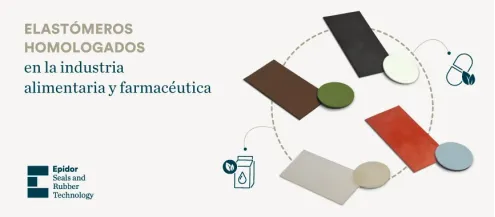
Our gaskets are manufactured with FDA approved materials and food regulations, including:

Ethylene propylene diene (EPDM)

Synthetic rubber with good resistance to hot water, steam, ketones and brake fluids, among other products. Good electrical insulator. Strong incompatibility with lubricants, so it is not used as a seal material.

Most common temperature range from -35 ºC to +150 ºC.

Fluoroelastomer / Viton™ (FPM)

This material is popularly known as viton. It has good resistance to lubricants, fuels and acids and bases, among other products. Peroxide-cured formulations improve its resistance to incompatible fluids such as alcohols and steam. It is a material widely used as seals and O-rings that stands out for its low permeability to gases.

Most common temperature range from -20 ºC to +210 ºC.

Gylon® (high-performance restructured PTFE)

This material is popularly known as Teflon. It is a thermoplastic (non-elastic) material with almost universal chemical resistance. It has a very low coefficient of friction and is practically non-stick. The problem of creep is largely solved by adding fillers such as graphite, coking carbon and glass fiber, among others, to the virgin PTFE.

Most common temperature range from -200 ºC to +260 ºC.

Acrylonitrile butadiene (NBR)

Synthetic rubber with exceptional behavior against lubricants, which makes it a first choice for seals and O-rings. Limited resistance to weathering and acids.

Most common temperature range from -30 ºC to +110 ºC.

Polytetrafluoroethylene (PTFE)

This material is popularly known as Teflon. It is a thermoplastic (non-elastic) material with almost universal chemical resistance. It has a very low coefficient of friction and is practically non-stick. The problem of creep is largely solved by adding fillers such as graphite, coking carbon and glass fiber, among others, to the virgin PTFE.

Most common temperature range from -200 ºC to +260 ºC.

Silicone (VMQ)

Methyl vinyl silicone rubber with outstanding thermal resistance and good cold flexibility. Good electrical properties. In general, its chemical resistance is poor. It is usually used in cryogenics.

Most common temperature range from -60 ºC to +250 ºC.

Other materials available upon request, depending on the process fluid, temperature and cleaning method used.

FAQ's about aseptic seals

What is the difference between a standard gasket and an aseptic gasket?
Aseptic gaskets are designed for hygienic joints, with no dead zones or gaps, making them ideal for preventing residue build-up and facilitating cleaning. Some variants, such as clamp-on flange gaskets, prevent the gasket from slipping when the system is opened, increasing safety and hygiene.
How often should they be replaced?
It is recommended to change them after each intervention, as they are subjected to fatigue stresses and high temperatures that accelerate their deterioration.
What regulations must they comply with?

Our gaskets comply with standards such as DIN, ISO, ASME BPE and SMS, as well as FDA and food contact requirements. In addition, there are models such as the D-Rings used in the dairy industry, adapted to DIN 11850 housings and compatible with DIN, SMS, US or BSOD standards.

Can they be manufactured in different colors?

Yes, depending on the material and application, aseptic seals can be supplied in different colors to facilitate traceability, line identification or visual quality control.

Do you need aseptic gaskets for your project?