Index
Custom FDA-approved VMQ silicone profiles: shape, color, hardness, and certification based on application
A sealing profile may seem like a minor component until it fits perfectly into its housing. And—whether due to a section that doesn’t compress enough, improper hardness, or a material lacking the documentation required by the industry—it can cause leaks, cleaning issues, or machine downtime.
That is why more and more machinery manufacturers and plant managers are looking for silicone profiles designed for a specific application, rather than adapting their equipment to a standard profile. At Epidor, we manufacture custom-made extruded VMQ FDA-compliant silicone profiles, tailoring the geometry, color, hardness, type of silicone, and documentation to each project.
In this article, we explain what can be customized, what VMQ silicone offers, and why a well-defined technical profile makes all the difference in the floor plan.
Why a Standard Silicone Profile Isn't Always the Solution
It is often the case that off-the-shelf solutions do not guarantee the expected leak-tightness or do not meet the hygiene and traceability requirements of industries such as food, beverages, pharmaceuticals, industrial machinery, and packaging.
The fact is that when the profile isn't clearly defined, the following may occur:
- Leaks and loss of airtightness.
- Cleaning issues and the risk of cross-contamination.
- Repeated machine stoppages and premature wear.
- Incompatibility with operating temperatures or cleaning products.
- Difficulty demonstrating compliance during quality or food safety audits.
VMQ Silicone: The Material Used in Technical Silicone Profiles
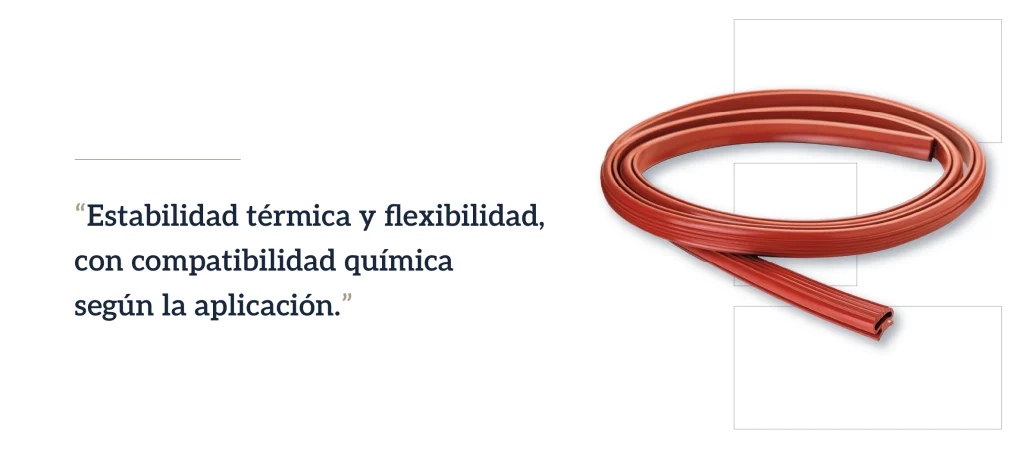
VMQ (Vinyl Methyl Silicone Rubber) stands out for its thermal stability. Its typical temperature range is from -60 °C to +250 °C, with good flexibility at low temperatures and good electrical properties, as detailed in our Guide to Sealing Materials.
In addition, it is an inert material that can be pigmented and formulated specifically for food, medical, pharmaceutical, and industrial applications.
That said, its chemical resistance is generally limited. That’s why it’s always a good idea to verify its compatibility with the products and cleaning agents it will come into contact with. This is one of the points we review at Epidor when defining each profile.
Custom Silicone Profiles: What Can Be Customized
Customization isn't limited to shape. A well-defined profile combines geometry, material, and documentation based on the actual application.
Geometry of silicone profiles based on a drawing or sample
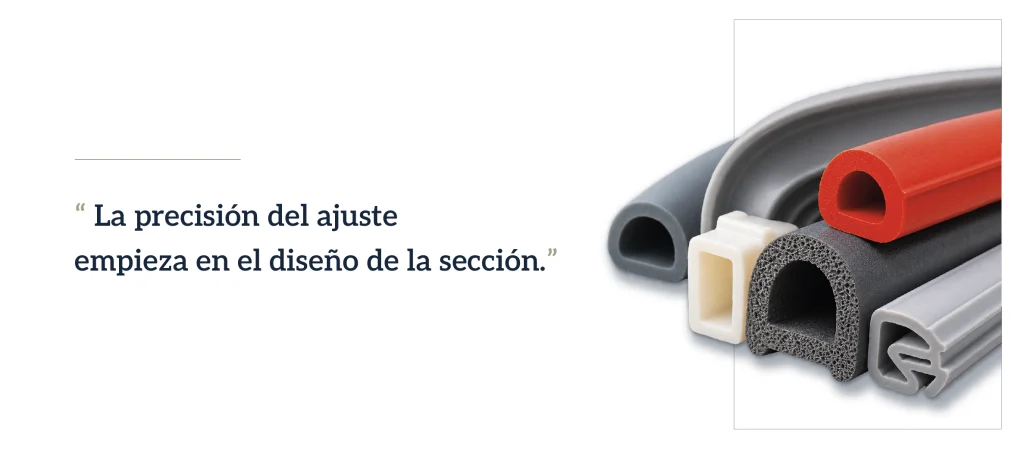
We develop elastomer profiles Based on a drawing, a sample, or a functional requirement: L-, T-, or U-shaped sections; tubular; trapezoidal; with tabs or a sealing lip; among others. Extrusion allows for the production of continuous profiles with high dimensional accuracy and in long lengths.
Designing the section based on the actual housing helps improve the profile's assembly, compression, and service life.
Color and hardness depending on the application
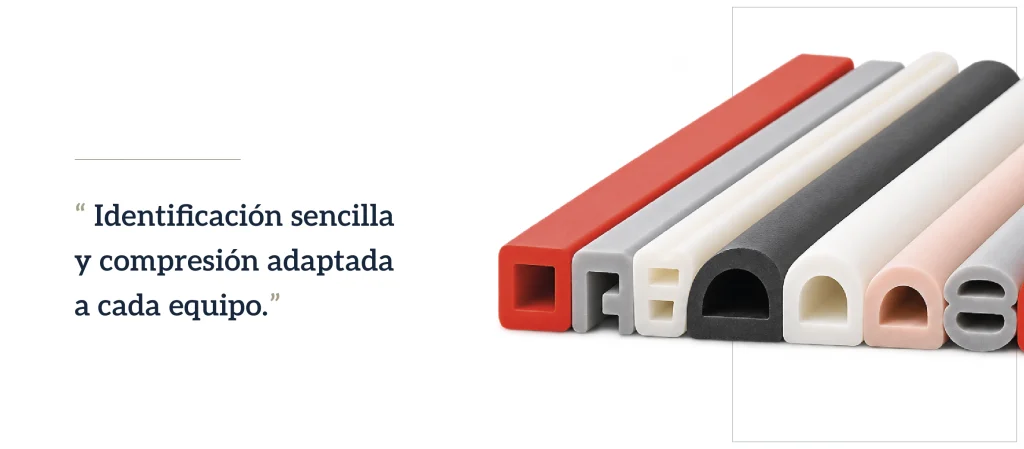
Each profile can be manufactured in different hardnesses, depending on the compression, the closing force, or the type of seal required by the equipment.
Color is also a management tool: it allows profiles to be differentiated by production line, application, customer, or criticality level, which makes identification easier during maintenance.
Silicone type: compact, sponge, or co-extruded
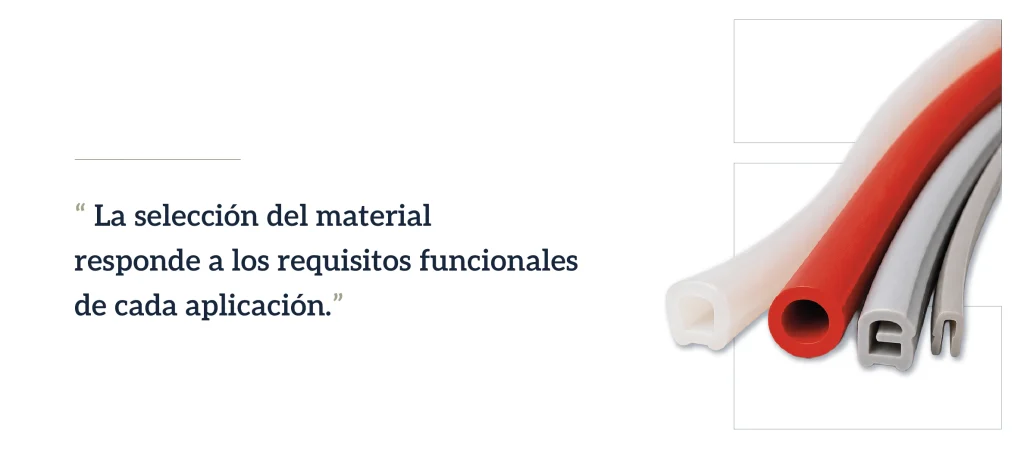
Depending on the profile's function, it can be manufactured from solid, foam, or co-extruded silicone. Foam or cellular versions, for example, are lightweight and flexible, making them suitable for compression or light insulation applications.
Documentation and Certification of the Compound
As we explained in our article on FDA materials and elastomers approved in the food and pharmaceutical industry, it is important to keep in mind that compliance depends on the specific compound.
The proposal may focus on compounds that comply with FDA regulations for food contact and, when required by the project, evaluate additional documentation (such as Regulation (EC) No. 1935/2004, BfR, or batch traceability).
At Epidor, we always verify the intended use, the type of contact, the temperature, the exposure time, and the available documentation. You can review our Product and Quality Certifications.
In-house manufacturing of silicone profiles via extrusion
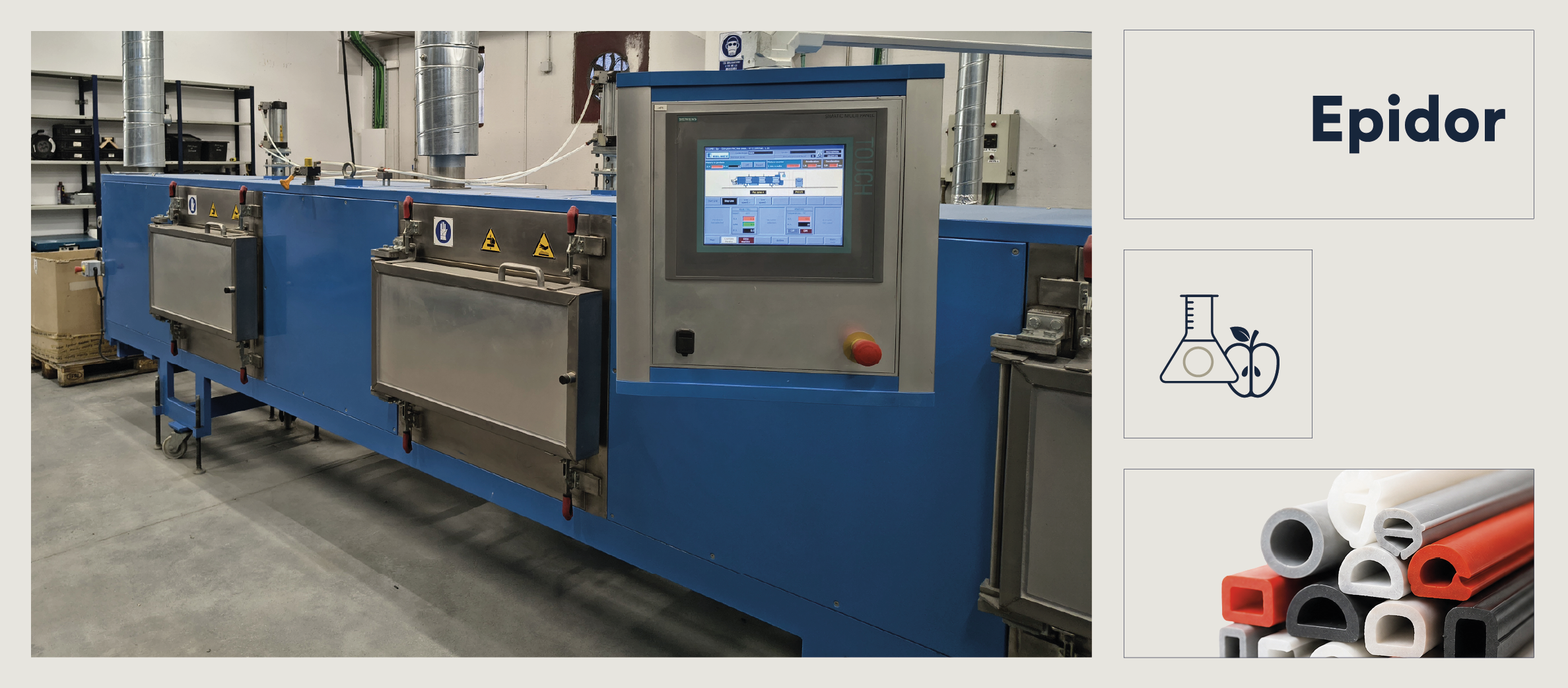
For us, FDA-approved VMQ silicone extruded profiles are not just a standard commercial solution, but an in-house manufacturing capability. With over 60 years of experience designing Custom Sealing Solutions, we guide the customer from the initial need to the finished product. Here is our step-by-step process:
- We provide consulting and technical advice to determine the appropriate material and geometry.
- We develop the product using samples, prototypes, and testing.
- We manufacture custom profiles at our facility.
- We offer personalized logistics and after-sales service.
In-house manufacturing allows us to strengthen process control, material identification, and supply consistency. In addition, compliance with specifications is verified through tests conducted in our quality laboratory. And if the design evolves, the profile can evolve with it.
Silicone Seals for the Food and Industrial Sectors
Silicone profiles are used as extruded seals, protective strips, insulation, or guides in applications such as:
- Sealing of doors and machine covers.
- Protection of edges and sensitive surfaces.
- Cushioning and insulation.
- Slide or retention guides.
- Sealing in metal structures or panels.
In the food and pharmaceutical, where product contact, hygiene, and traceability are critical, properly defining the profile helps improve leak resistance, facilitate cleaning, and ensure greater compliance during audits.
If you need custom silicone profiles for your application, Contact our technical team and we'll help you define the solution based on the blueprint, the sample, or the functional requirement.
